Rails Starter
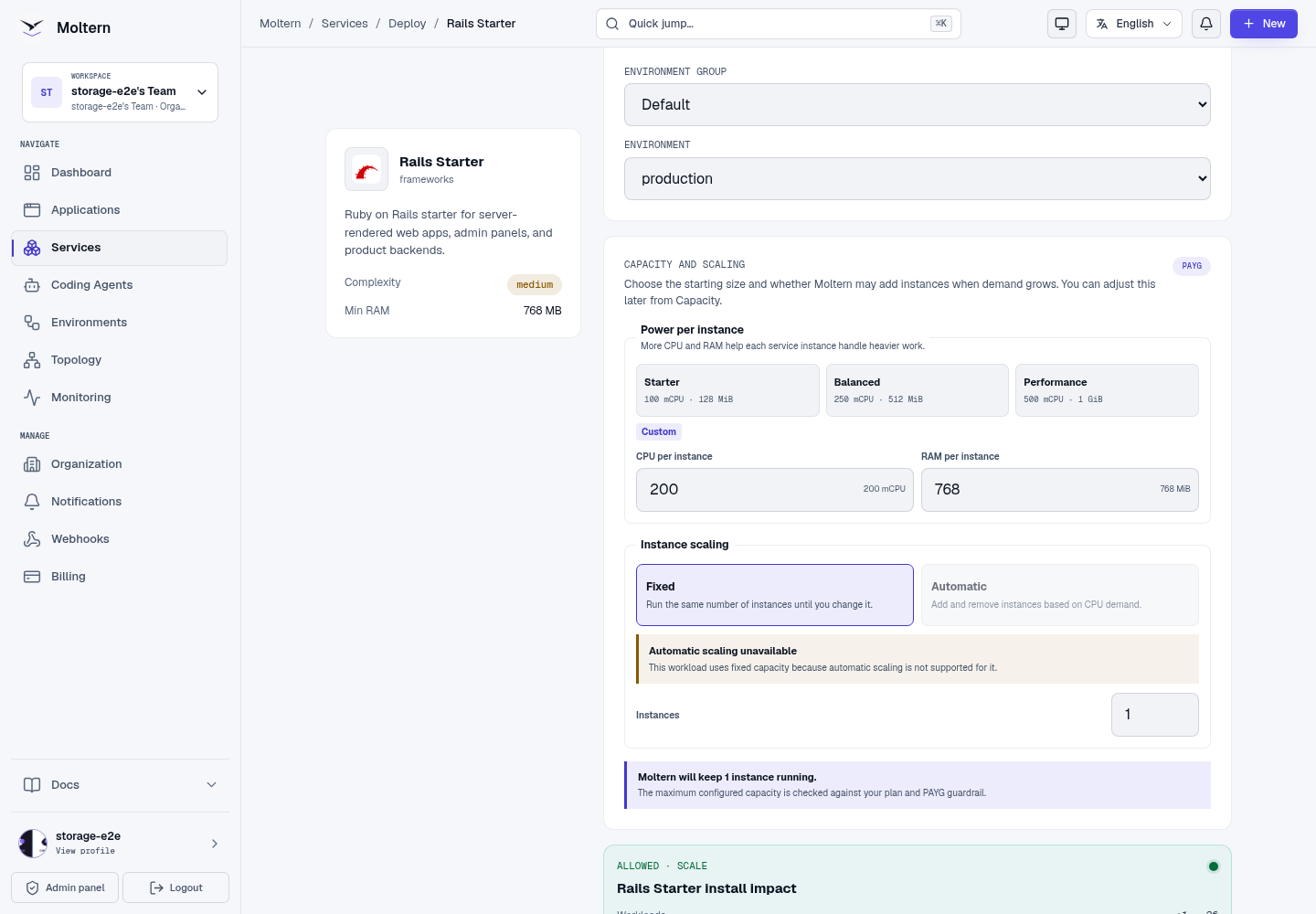
Deploy The Starter
The starter page is publicly accessible. Workspace permissions do not add application login protection. Add your own authentication before using sensitive data, and use a production deployment for a finished application.
Create a Ruby on Rails prototype with a persistent source workspace. The starter is a development server, not a production deployment of your app.
- Open Services and select Rails Starter.
- Set a name and environment, then review capacity. The functional test used 200 mCPU / 768 MiB; this is not a production sizing recommendation.
- Choose Preview deploy, review the allowance and Confirm deploy.
- Follow Live Logs until the real application is ready, then open its URL.
Open The Application
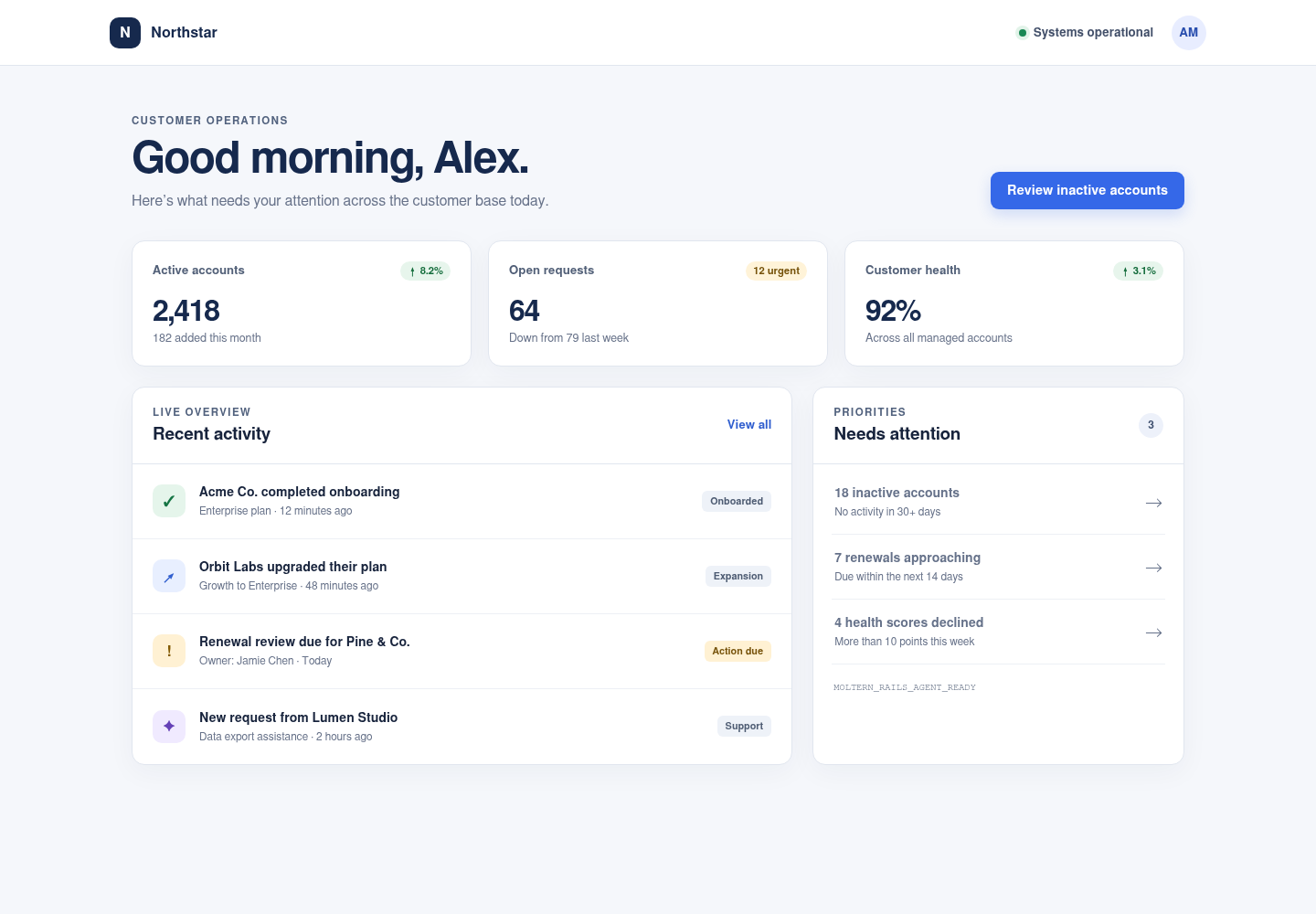
The generated URL should show the actual framework page, not an offline placeholder. A temporary 503 can mean startup has not finished.
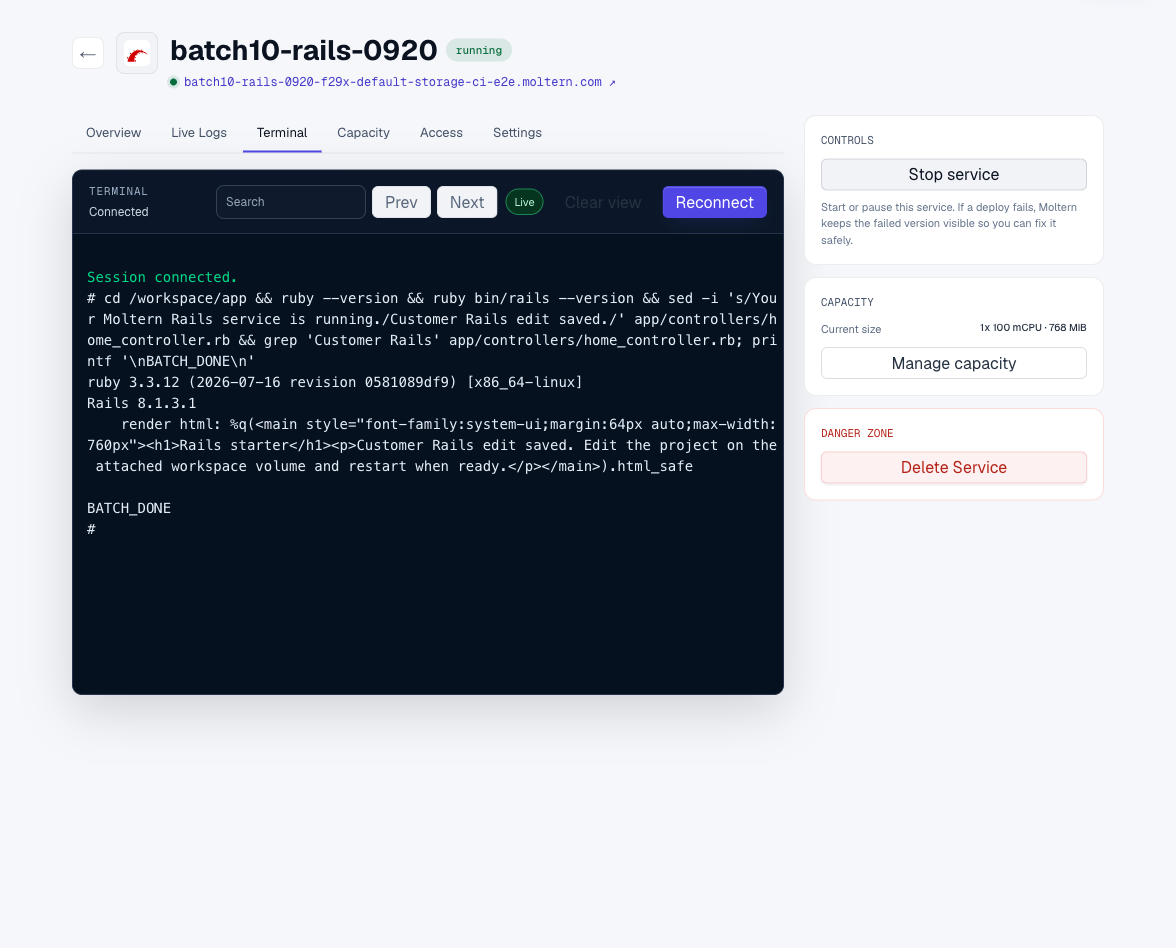
Use The Terminal
Open Terminal and wait for Connected:
cd /workspace/app
ruby --version
ruby bin/rails --version
Edit app/controllers/home_controller.rb to change the generated homepage.
Use Stop service, then Start service, and wait for dependencies and Puma
to start before refreshing. Run launchers with ruby bin/rails, not directly as
executable files.
Work With Git And A Coding Agent
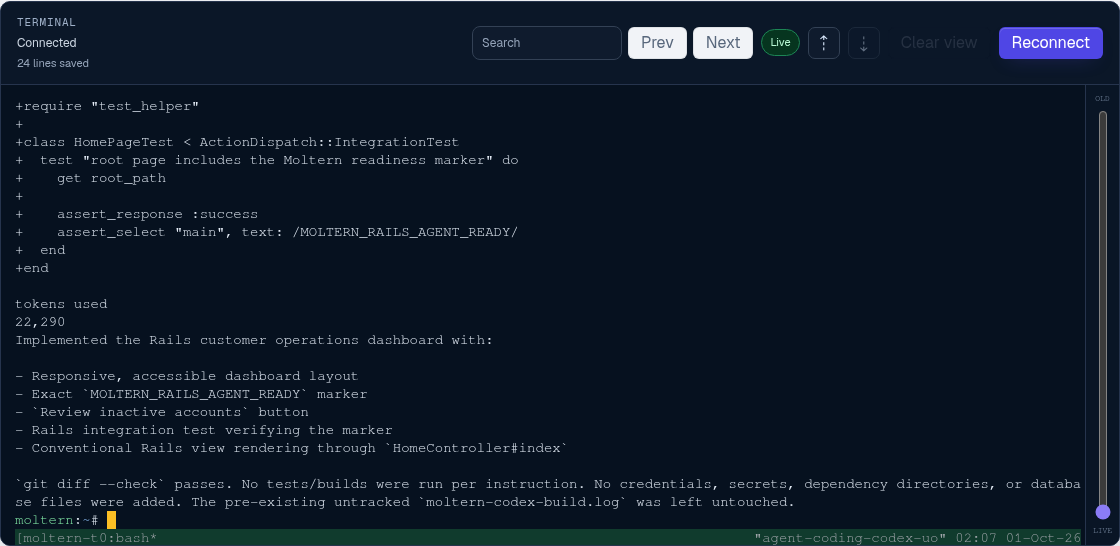
Attach the Rails service under one coding agent's Resources settings and grant only the scope needed for the task. Use a private feature branch and a repository-scoped credential; repository access is not embedded in the image.
Pull and review the exact agent commit in /workspace/app, then run:
bundle exec rails test
Verify the public page before and after restart. Remove temporary Git access and the agent attachment when the task is complete.

Storage And Private Connections
Project files live in this service's workspace under /workspace/app. Keep
source in Git too; persistent storage is not a versioned backup. Connect only
the private services this project needs through the connection controls.
Delete Service with Delete stored data requests runtime and workspace cleanup. Wait for cleanup to finish before assuming the allowance is released.
Troubleshooting
If the browser shows Blocked hosts, the hostname is not authorized by the Rails application. New deployments allow the exact assigned Moltern hostname. For an existing project or a custom domain, explicitly configure the allowed hostname in Rails. Do not disable host protection or use a wildcard.
The starter is generated without Active Record. Adding a database requires both an explicit service connection and application-side database setup; a network attachment alone does not add models or migrations.
Supported Workflow
Use the workspace terminal or an attached coding agent to edit the Rails
project, manage gems with Bundler, run bundle exec rails test, preview the
site, and synchronize changes with a private Git repository. Project files
remain available after stopping and starting the workspace.
Before production, connect the intended database, test migrations and jobs, and review credentials, caching, mail, and host authorization. Existing workspaces do not receive newer starter templates from a capacity-only update.